Pl. I · Intuit Mailchimp · Messaging & billing
Designing an Intuit Mailchimp enterprise messaging plan experiment
How I took a complex new messaging plan and made the experience simple.
01 — Problem & goals
Mailchimp’s mid-market enterprise customers face billing unpredictability and pauses in service
Intuit Mailchimp customers that send high volumes of SMS marketing messages are subject to manual credit top-offs and per-event credit card charges that can fire multiple times per day during high-send periods. This makes it impossible to accurately forecast monthly messaging costs. Failed charges can trigger send pauses, directly damaging campaign performance and customer trust in the platform.
Problem
Mid-market customers using SMS today are subject to manual credit top-offs and per-event credit card charges that can fire multiple times per day during high-send periods. This makes it impossible to accurately forecast monthly messaging costs. Failed charges can trigger SMS sending pauses, directly damaging campaign performance and customer trust in the platform.
Hypothesis
If we launch a unified SMS enterprise plan with balance-due based billing and consistent overage logic, then mid-market customers will adopt SMS at higher rates, billing-related churn and support burden will decrease, and our sales team will win more SMS-specific deals that were previously out of reach.
Design goals
I used Claude to help refine the project requirements for design-specific tasks. The requirement briefs are written for all teams (design, engineering, product, analytics) as one source of truth. It’s often difficult to tease out what’s needed for a design MVP. With Claude’s plain language output, I found several more areas that required designs vs. what was originally pitched. The full scope included:
- Custom SMS enterprise purchase & upgrade flows
- Platform-wide UI cleanup & state management
- Gated visibility
- Contextual upsell & discoverability
Key performance indicators
Success will be a measurable increase in SMS adoption rate among eligible mid-market accounts, growth in SMS adoption, and reduction in billing-related support tickets within 6 months of broad rollout.
As measured by
- SMS adoption rate (%)
- SMS monthly recurring revenue from mid-market
- Win rate (%) for SMS-led sales deals
My role
I was lead and sole product designer overseeing the project from discovery, to concepts, to content design, to final design delivery. The team included a product manager and a front-end engineer.
02 — Discovery
Current experience audit
Currently a customer can view their SMS plan and make edits only to publicly available plans. The enterprise SMS plan is a sales-led experiment that’s not currently available in the product experience.
The current experience limits the changes a user can make in their messaging plan.
Opportunities identified based on product knowledge
There are several areas identified within the product experience that aren’t called out in the brief which must be addressed for a cohesive user experience.
- How is this experience different from a current offer for auto-refill?
- What happens when a user hits their SMS credit limit while building an SMS? Will they be notified that overages will begin if they proceed?
- When creating an email, the user’s prompted to also send an SMS. When at their credit limit, will they be notified that overages will begin if they proceed?
- Will there be product-triggered emails to notify users that overage pricing is now in effect through the end of their billing cycle?
- What are all the ways in which a user might try to understand what they’ll be charged on the next billing cycle?
- If the user does a web search and lands on a Mailchimp help article about overages, will this article be updated to reflect the enterprise plan info?
03 — Ideation
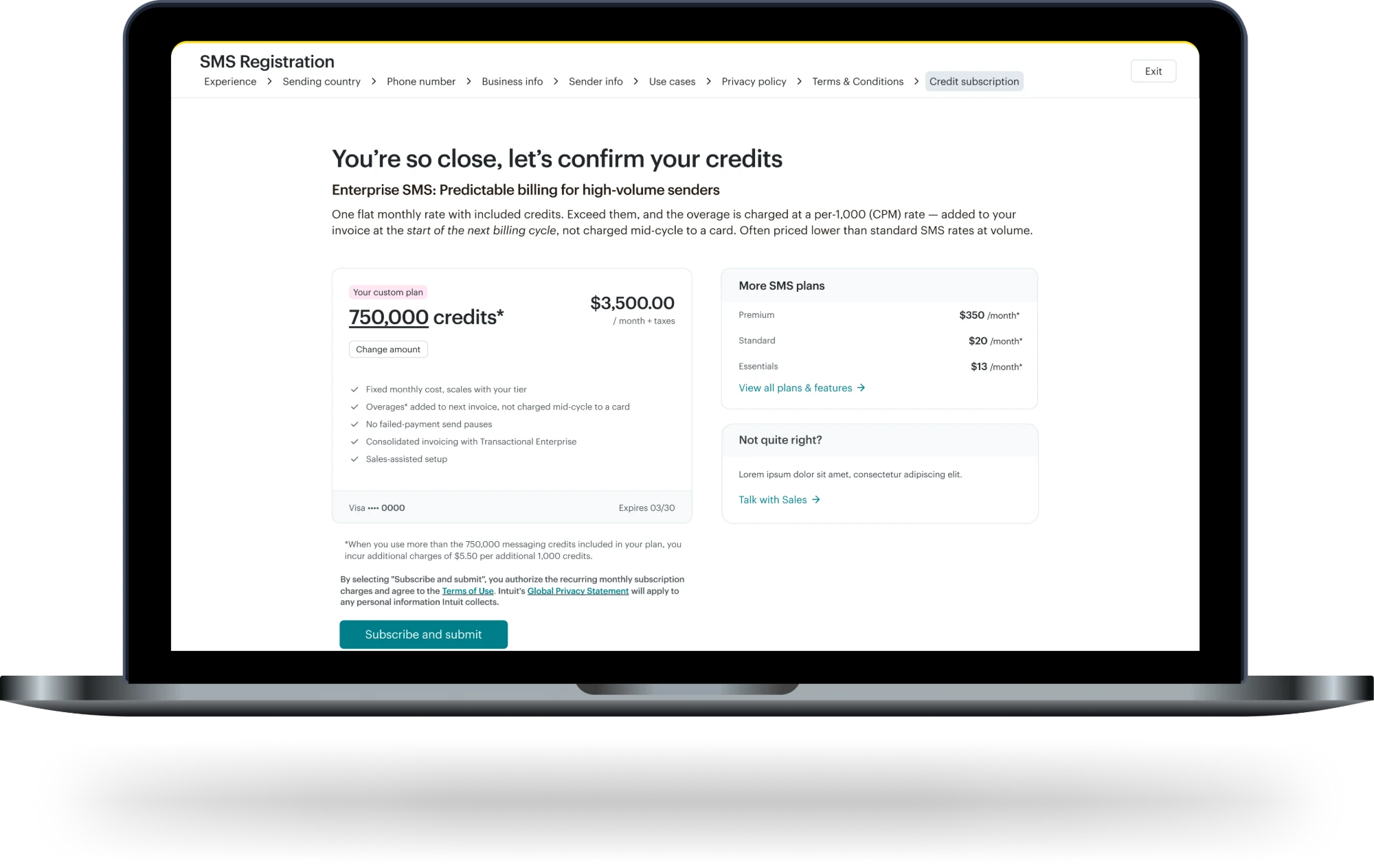
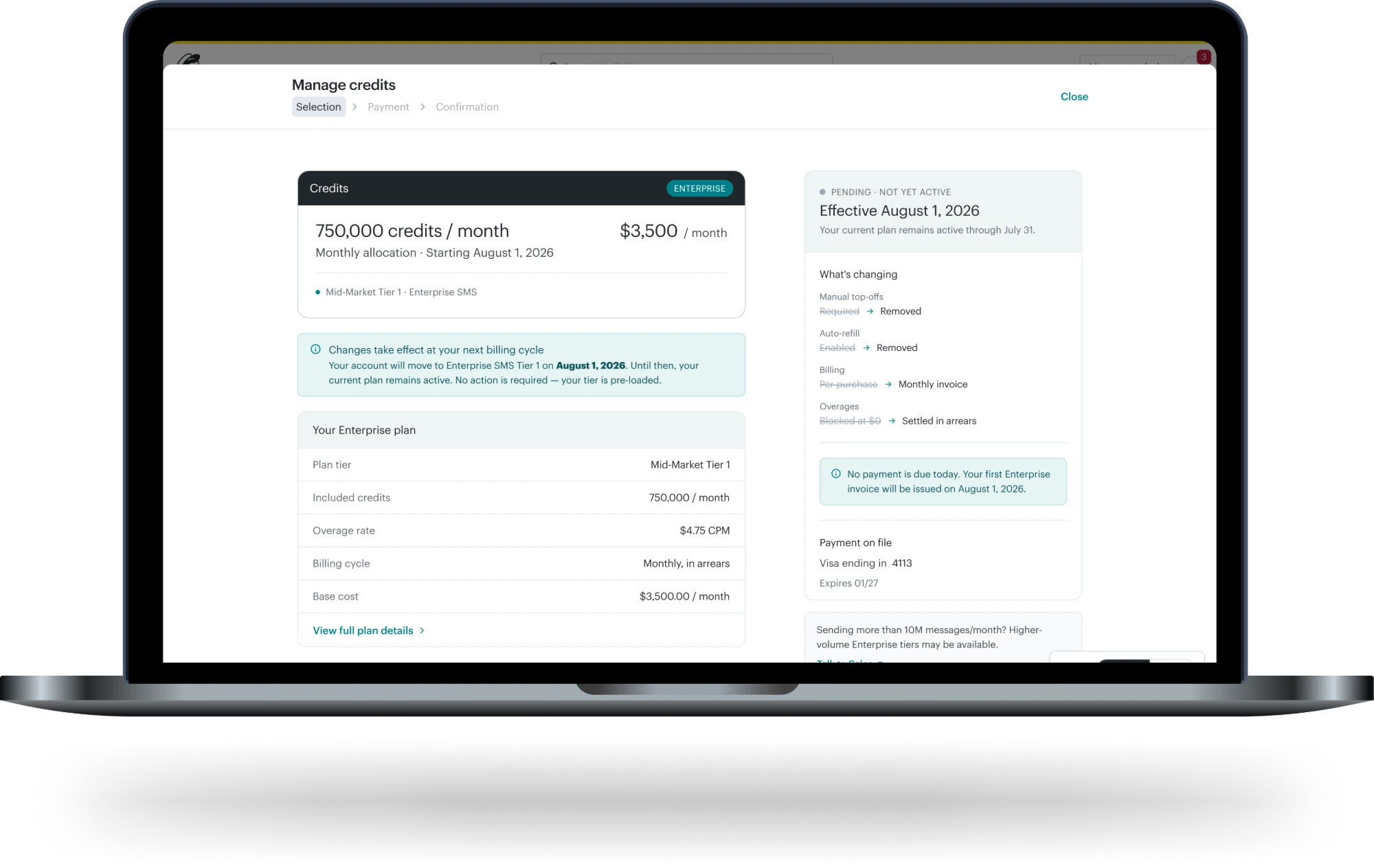
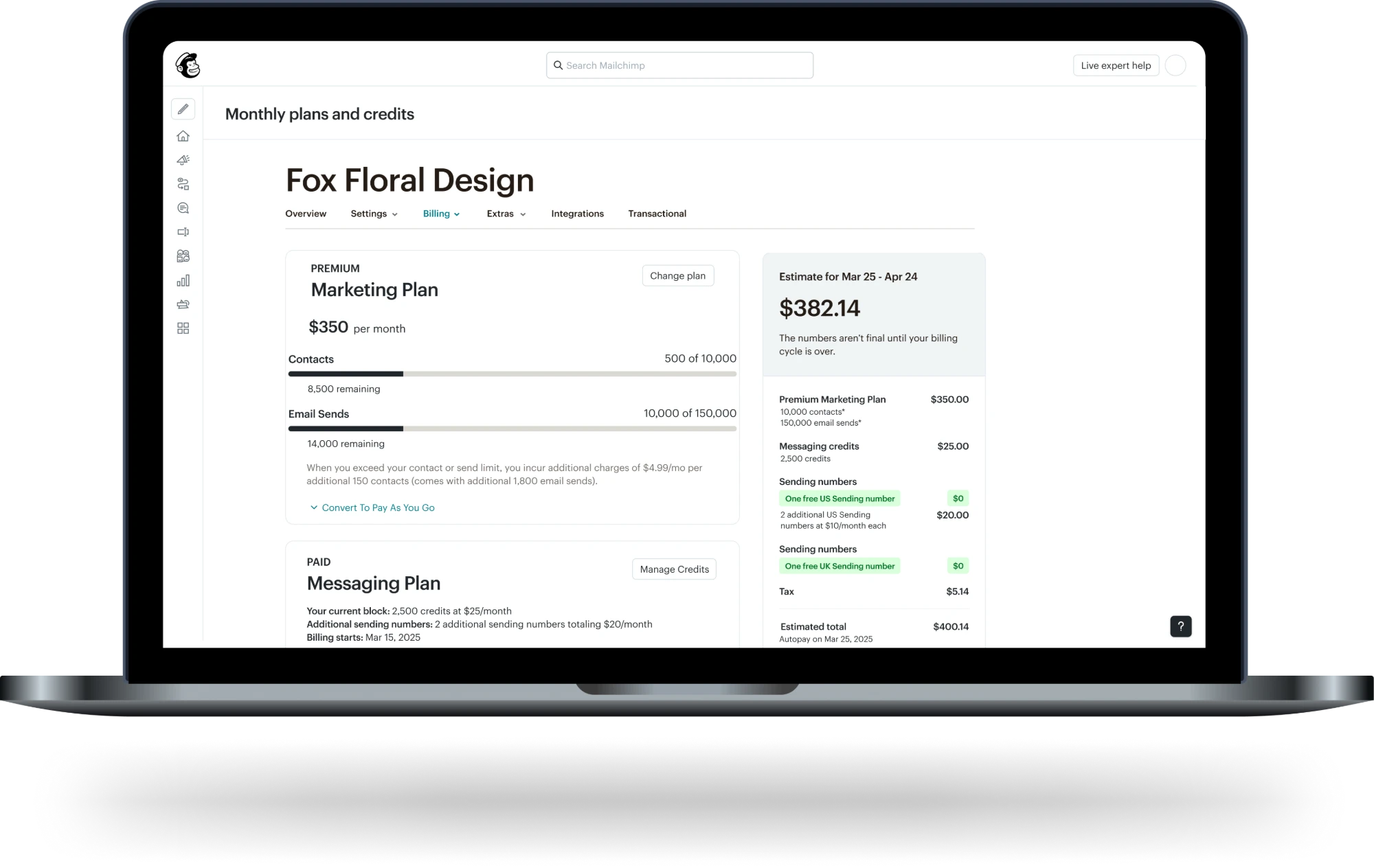
What guided my choices
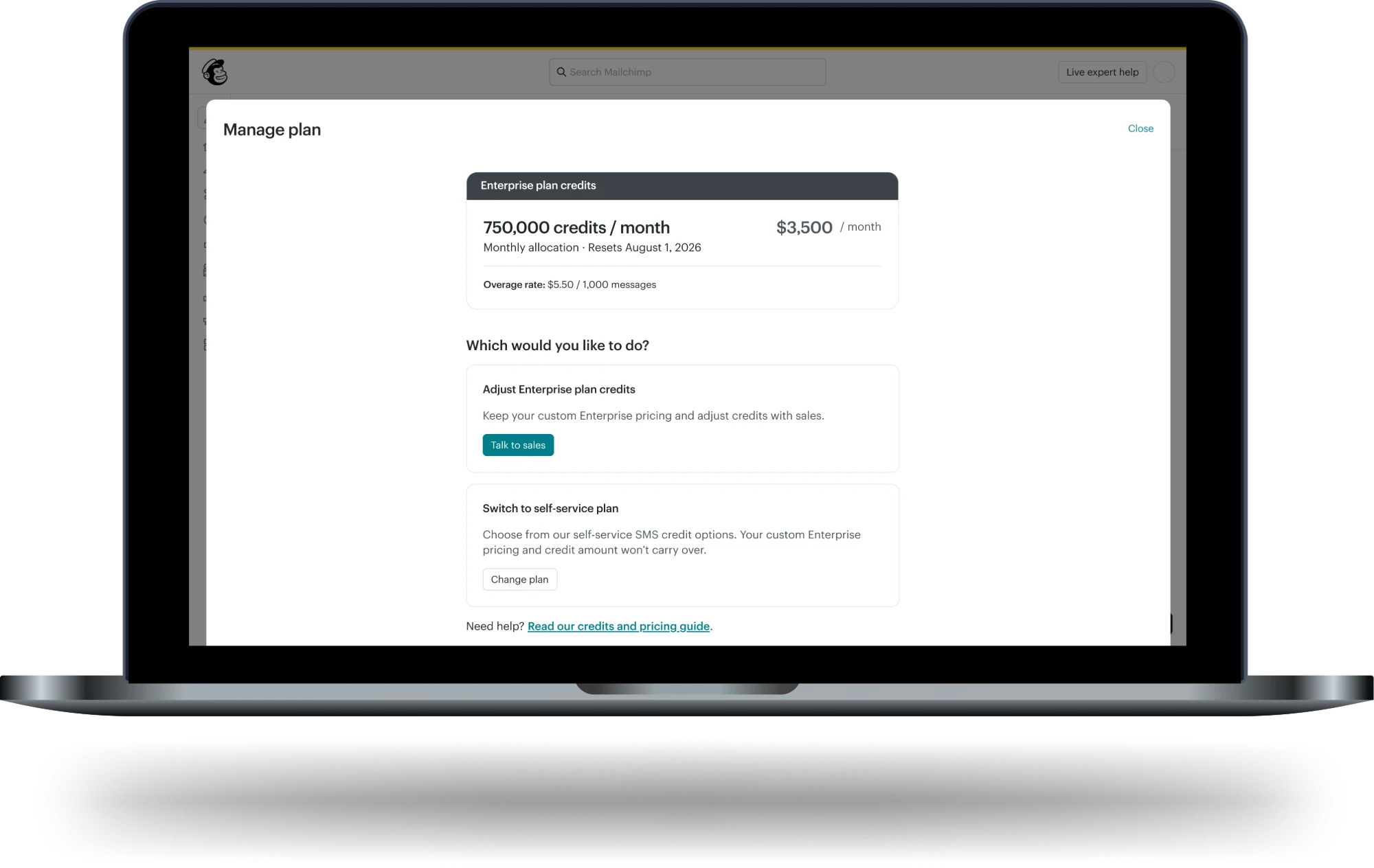
There are several functions I wanted the user to be able to achieve on the revised plan page, which drove the design ideation.
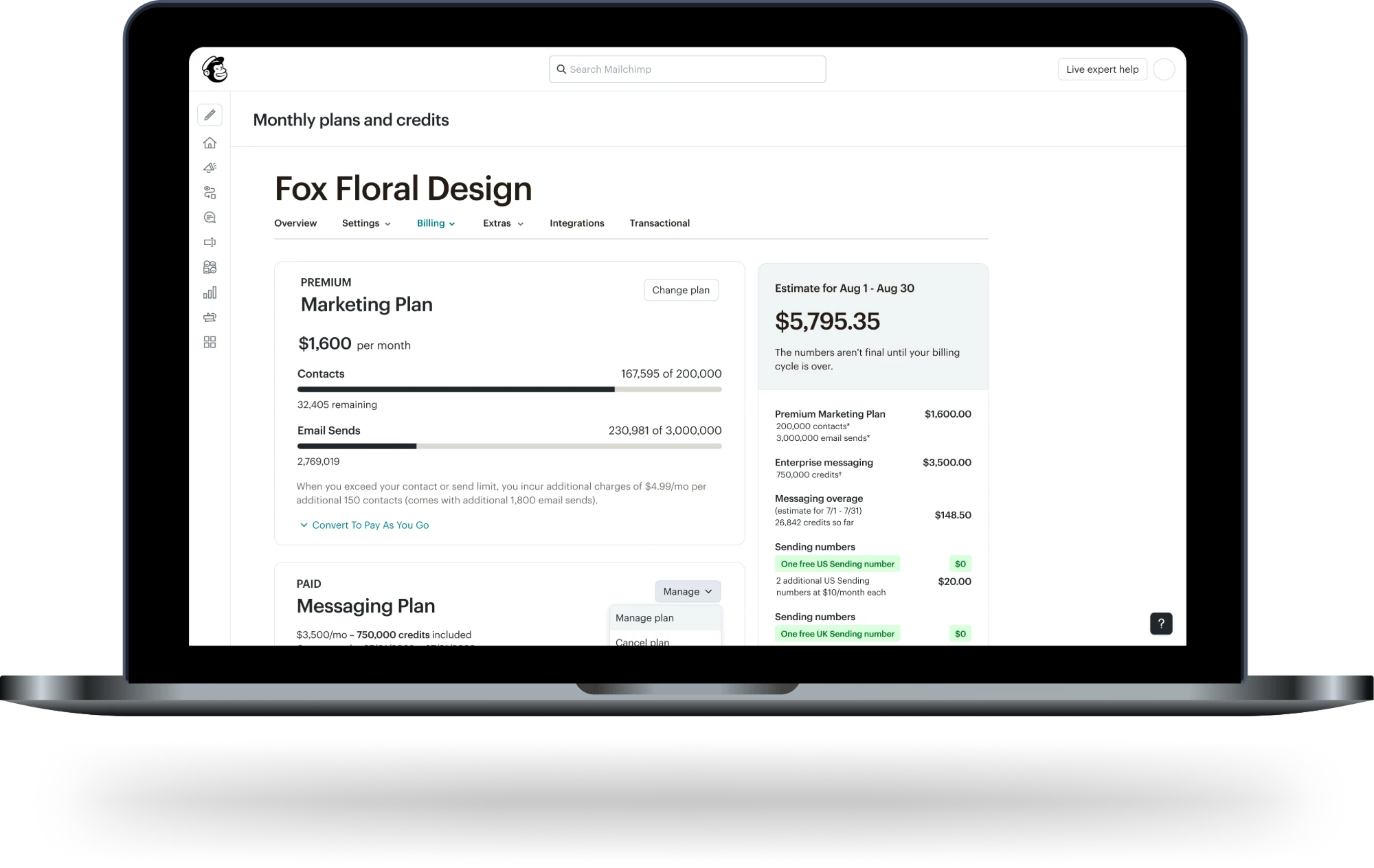
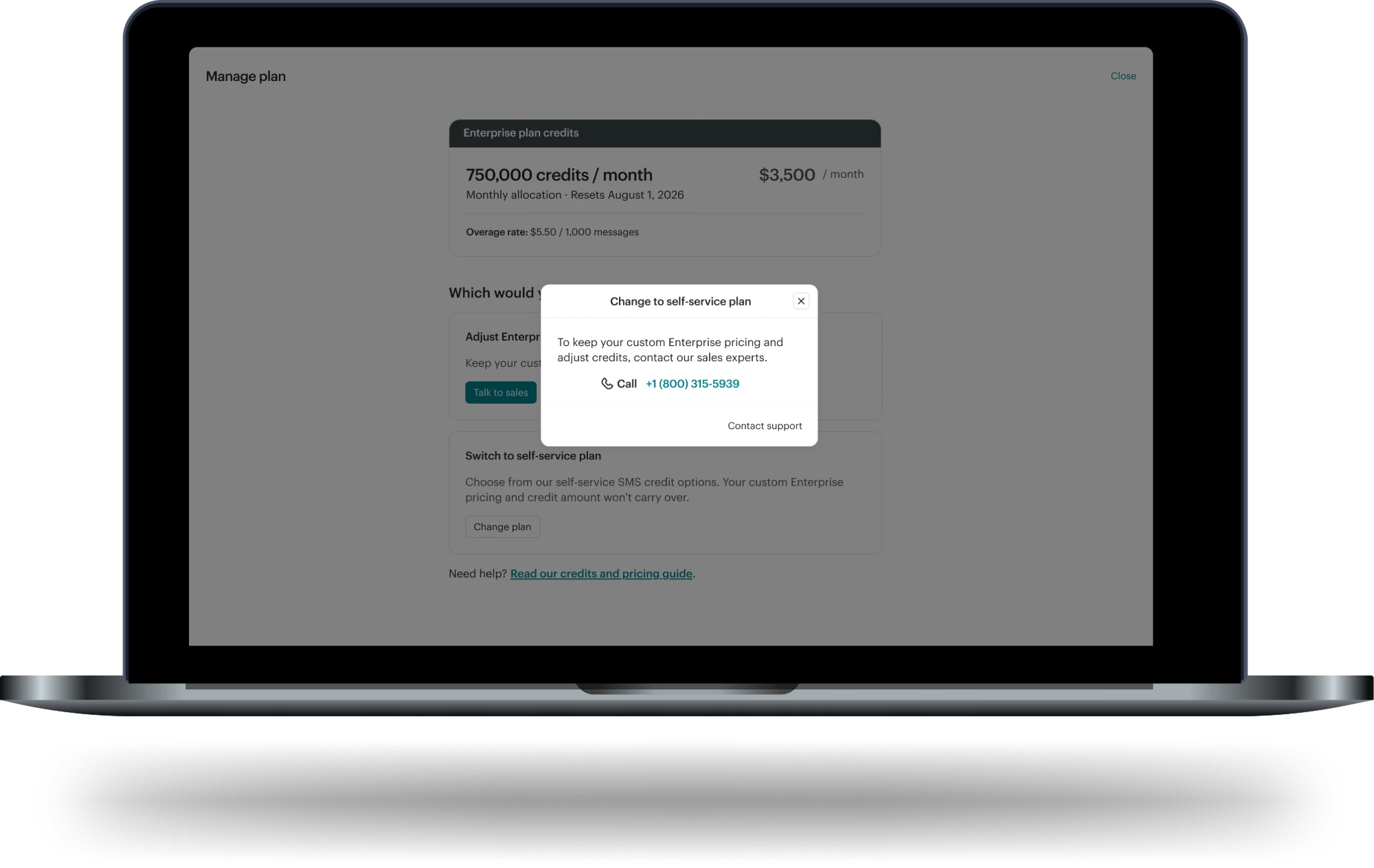
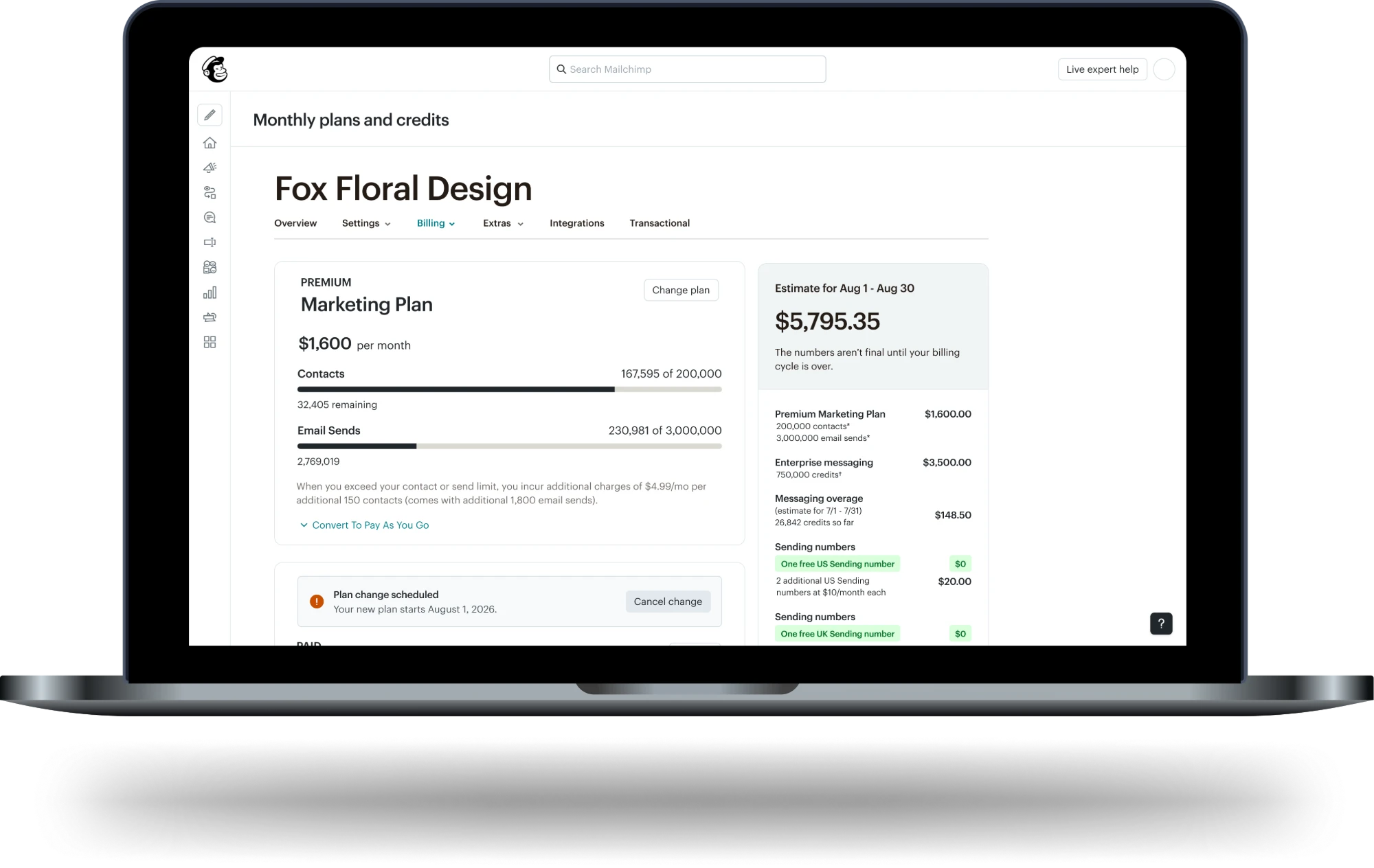
First, I changed the page link and name from “Manage credits” to “Manage plan” as the ability to adjust the plan credits is now the option to change the plan itself.
Next, I removed the current functionality allowing the user to buy top-off credits—now no longer needed in the enterprise messaging plan.
Third, I made the primary call-to-action the option to talk to a sales expert if the plan they selected wasn’t the right fit.
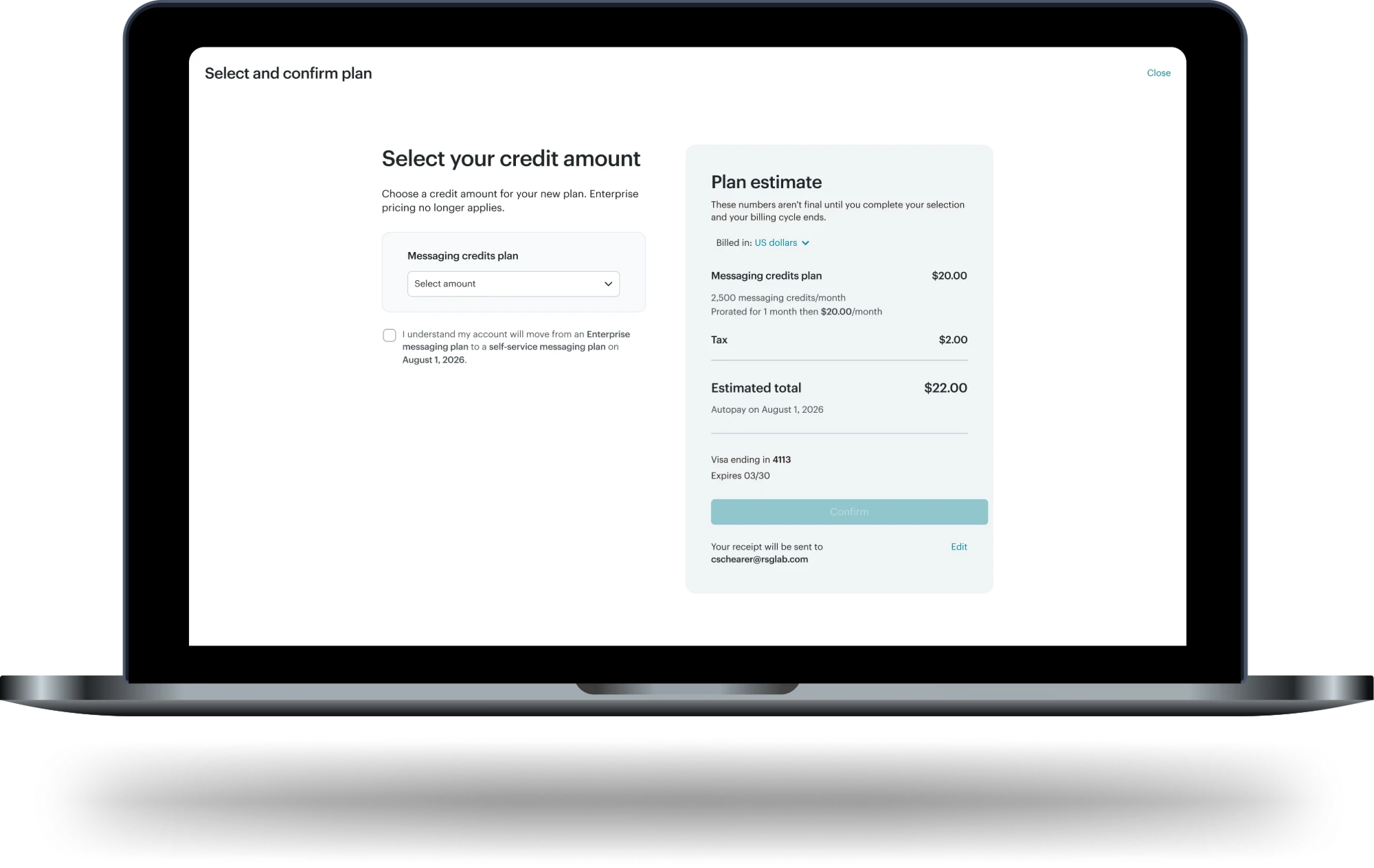
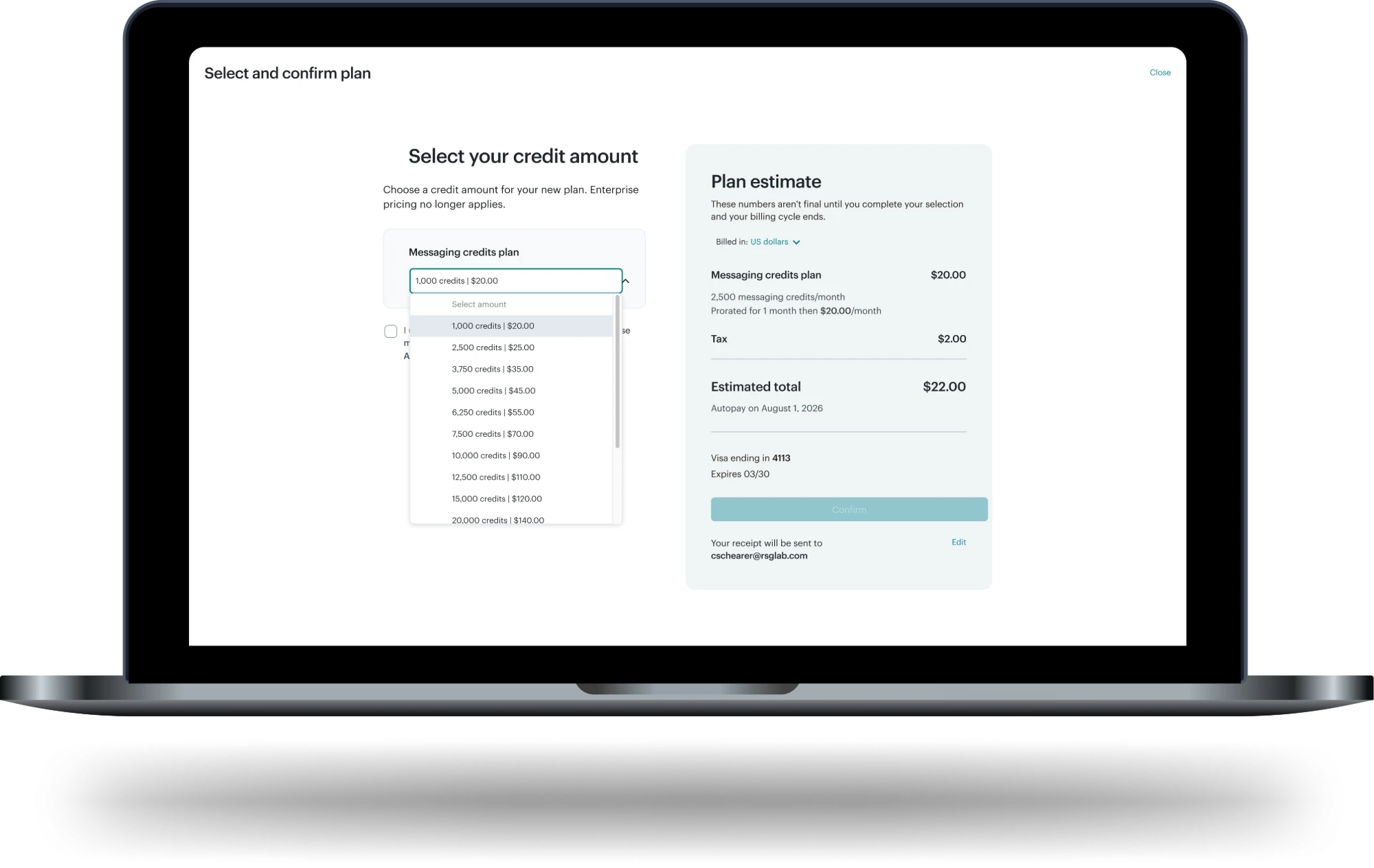
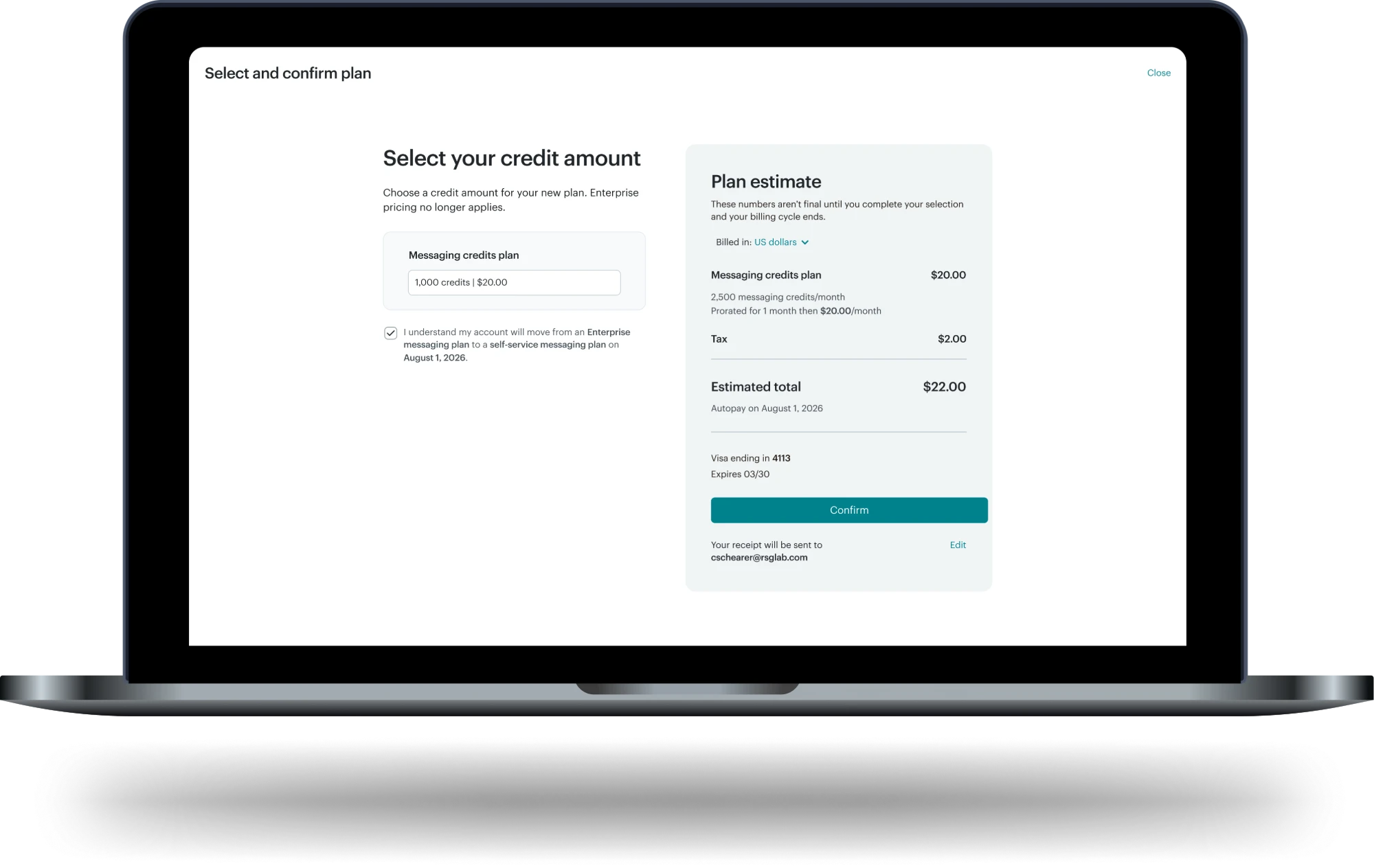
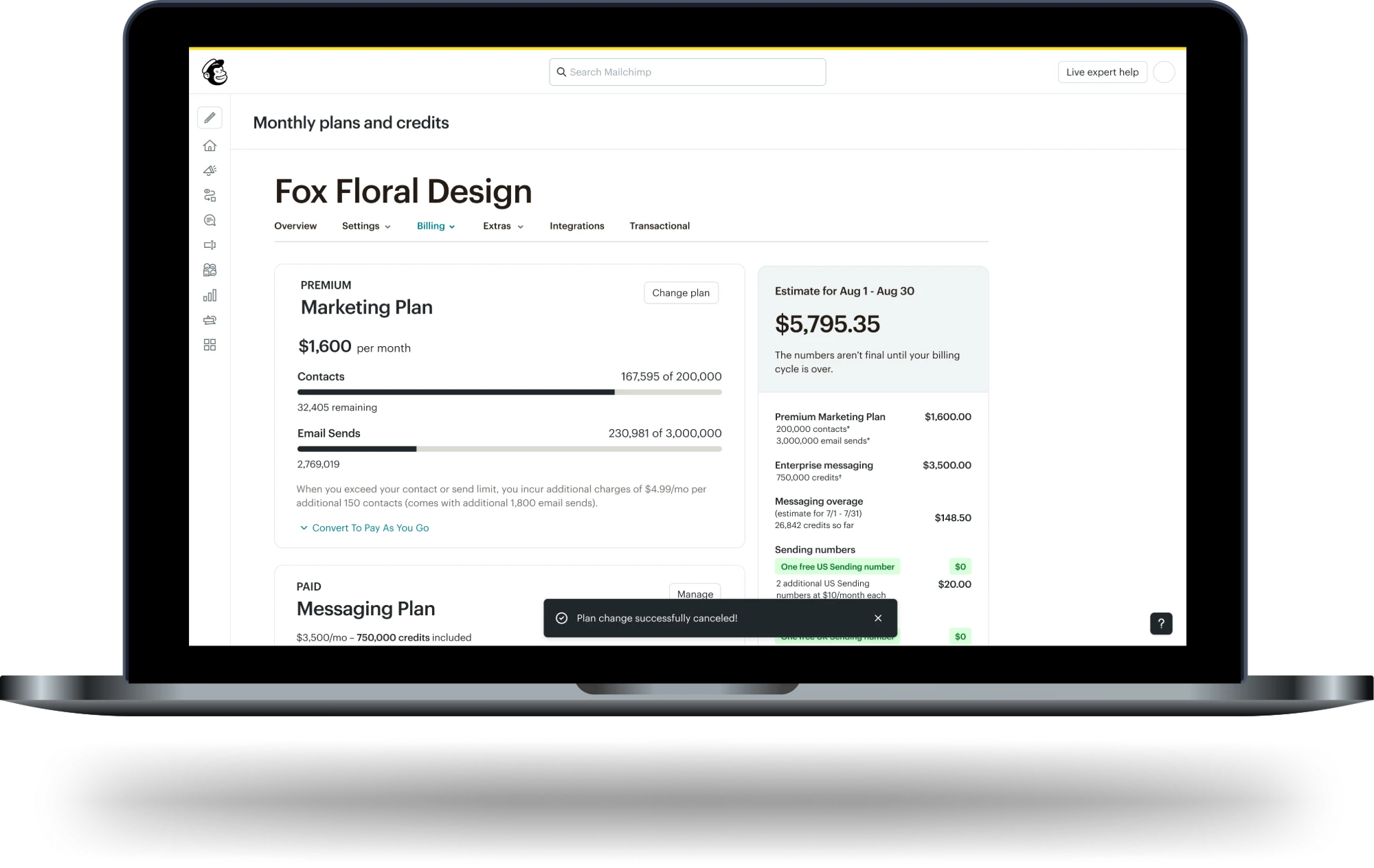
Finally, I created a way for the user to switch from their sales-enable plan option back to a publicly available plan.
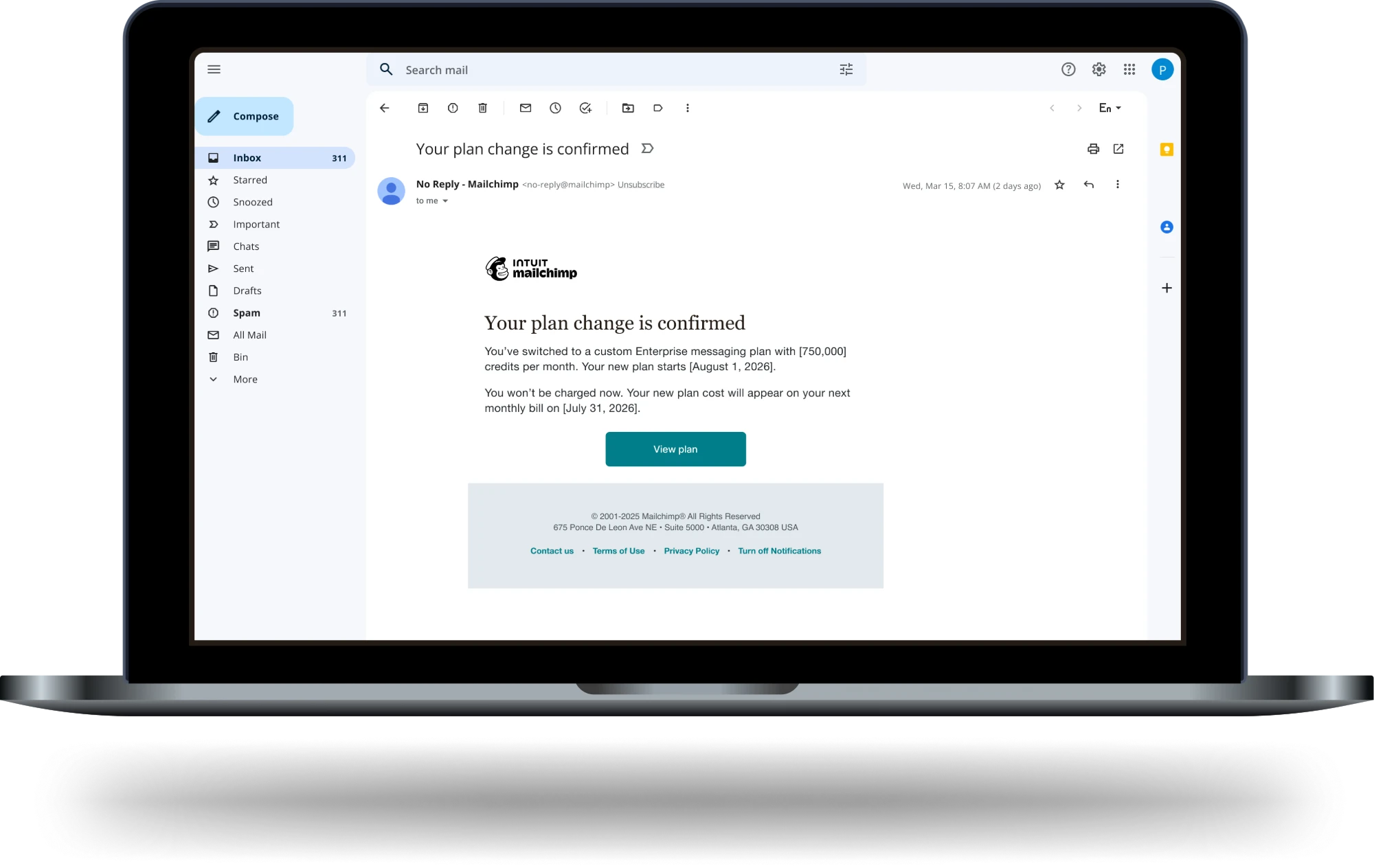
Each of these items requires simple and clear communication, with different destinations.
04 — Prototype
05 — Final designs
06 — Results & learnings
Results
This project was handed off at the end of my contract in August 2026. Currently awaiting results from former colleagues, once the experiment reaches statistical significance.
What I learned
When this project was pitched in kickoff, it was framed as a couple of minor screen updates. I knew when I understood the impact of the experiment that it would require many more updates than initially described.
I was new to the Mailchimp app so I had blind spots. I met with a principal designer on our team who had been working exclusively on the Mailchimp app for years. She was able to help me find blindspots in the product requirements. If I had tried to design this project in a silo without consulting a subject matter expert, these blindspots would have been missed. When in doubt, ask for another pair of eyes.
Using Claude to break down the product requirements into clear, digestible design goals was the first time I had tried this process. I found it really helpful and will use it going forward.